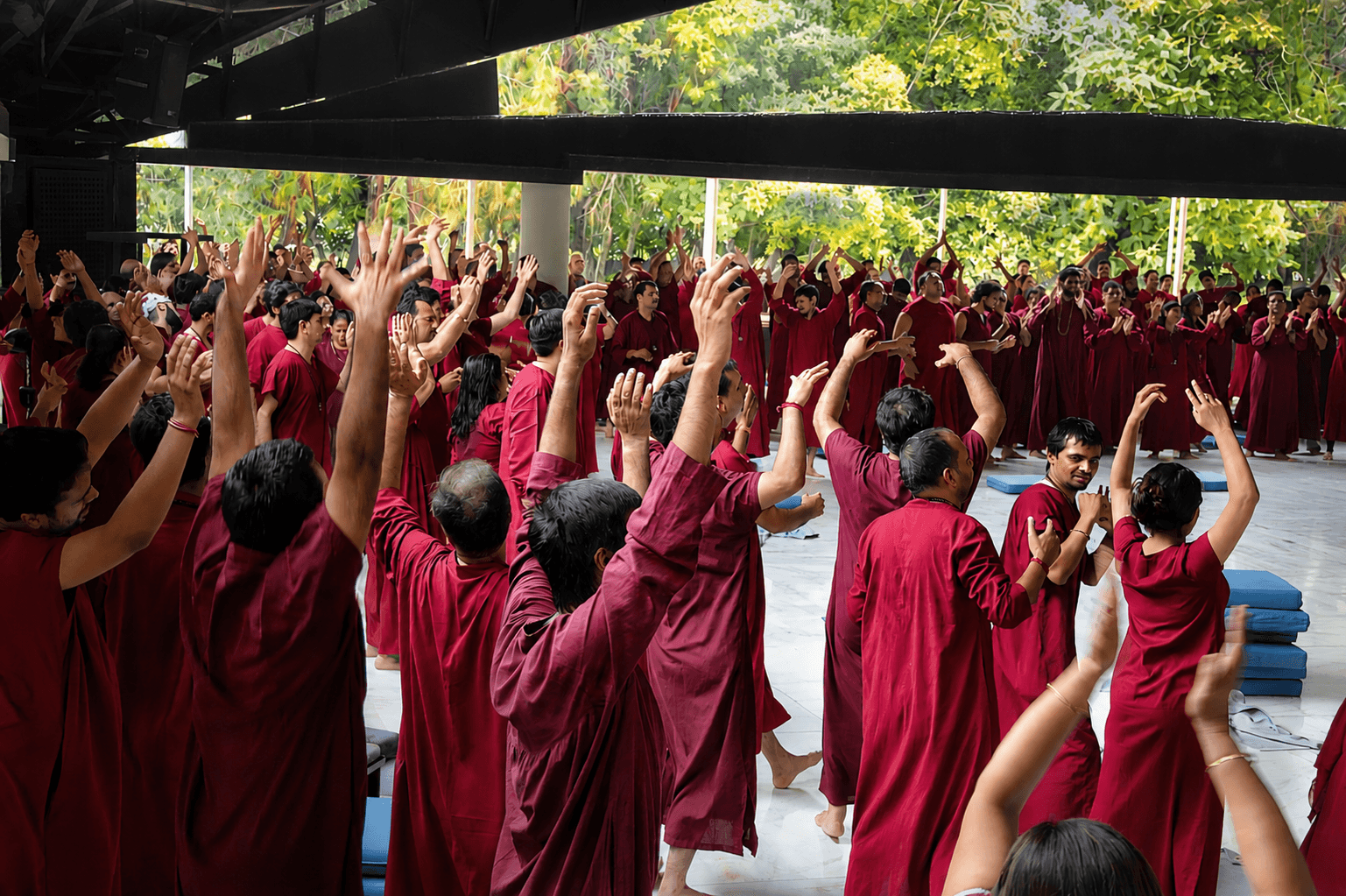
Osho's active meditations begin with physically energetic stages that may involve dancing, shaking, breathing or any other cathartic activity and they end with a period of silence. All stages except the silent ones are usually accompanied by music.
“In Buddha’s time, dynamic methods of meditation were not needed. People were more simple, more authentic. They lived a more real life. Now, people are living a very repressed life, a very unreal life. When they don’t want to smile, they smile. When they want to be angry, they show compassion. People are false, the whole life pattern is false. People are just acting, not living. Many incomplete experiences go on being collected, piled up inside their minds. Just sitting directly in silence won’t help. The moment you will sit silently, you will see all sorts of things moving inside you; you will feel it almost impossible to be silent. First throw those things out so you come to a natural state of rest. Real meditation starts only when you are at rest.”
- OSHO
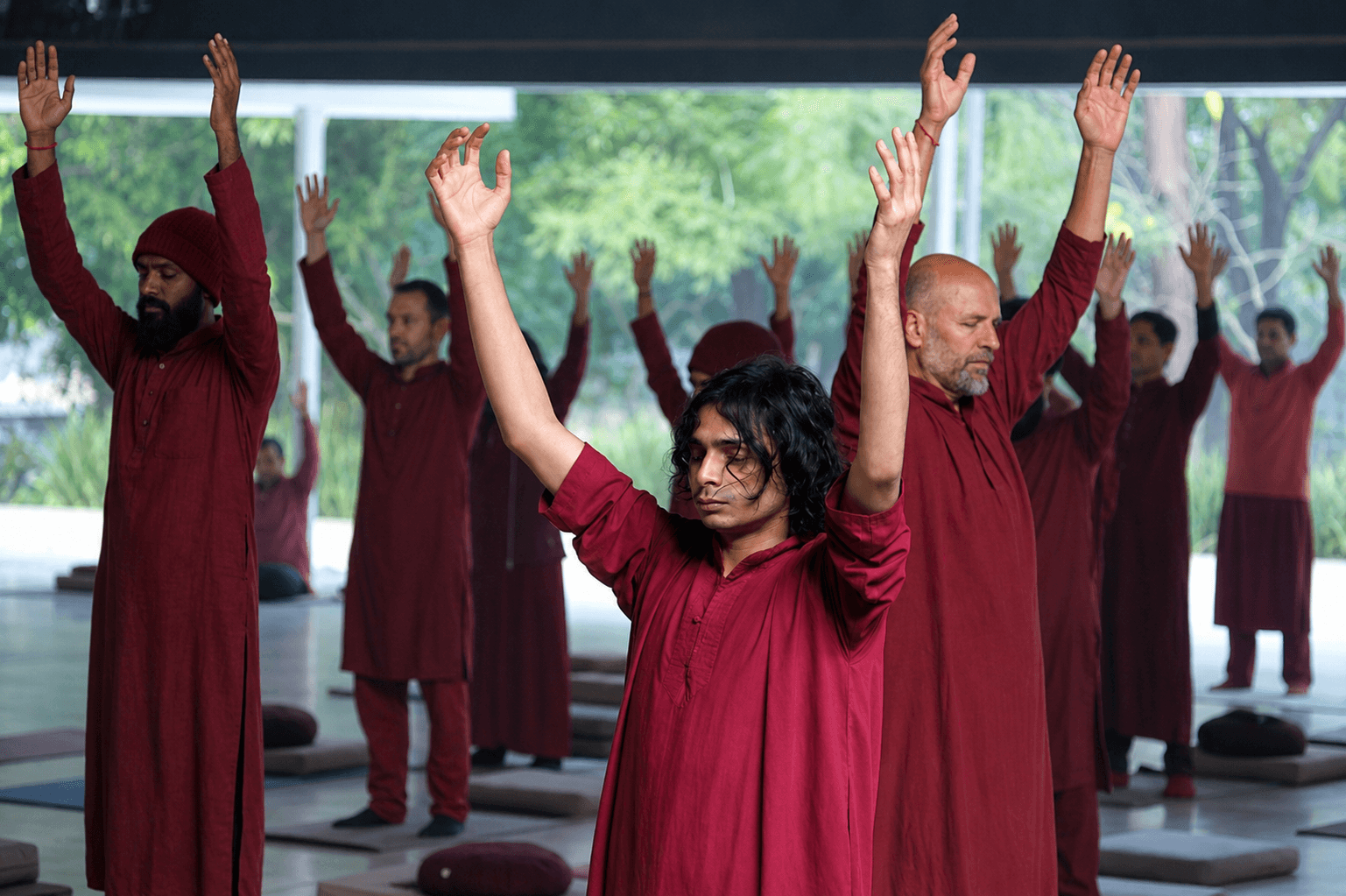
"This is a meditation in which you have to be continuously alert, conscious, aware. Whatsoever you do, remain a witness."
- the daily morning meditation at the ashram
WHEN the sleep is broken, the whole nature becomes alive; the night has gone, the darkness is no more, the sun is coming up, and everything becomes conscious and alert. This is a meditation in which you have to be continuously alert, conscious, aware, whatsoever you do. Remain a witness. Don't get lost.
It is easy to get lost. While you are breathing you can forget. You can become one with the breathing so much that you can forget the witness. But then you miss the point. Breathe as fast, as deep as possible, bring your total energy to it, but still remain a witness. Observe what is happening, as if you are just a spectator, as if the whole thing is happening to somebody else, as if the whole thing is happening in the body and the consciousness is just centered and looking. This A woodcutter, a stone-breaker need not do cathartic meditation - the whole day they are doing it. But for the modern man things have changed.
Witnessing has to be carried in all the three steps. And when everything stops, and in the fourth step you have become completely inactive, frozen, then this alterness will come to its peak.
The dynamic Meditation lasts one hour and is in five stages. It can be done alone, but the energy will be more powerful if it is done in a group. It is an individual experience so you should remain oblivious of others around you and keep your eyes closed throughout, preferably using a blindfold. It is best to have an empty stomach and wear loose, comfortable clothing.
First Stage: 10 minutes.
Breathe chaotically through the nose, concentrating always on the exhalation. The body will take care of the inhalation. Do this as fast and as hard as you possibly can - and then a little harder, until you literally become the breathing. Use your natural body movements to help you to build up your energy. Feel it building up, but don't let go during the first stage.
Second Stage: 10 minutes.
Explode! Let go of everything that needs to be thrown out. Go totally mad, scream, shout, cry, jump, shake, dance, sing, laugh, throw yourself around. Hold nothing back, keep your whole body moving. A little acting often helps to get you started. Never allow your mind to interfere with what is happening. Be total.
Third Stage: 10 minutes.
With raised arms, jump up and down shouting the mantra 'HOO! HOO! HOO!' as deeply as possible. Each time you land, on the flats of your feet, let the sound hammer deep into the sex centre. Give all you have, exhaust yourself totally.
Fourth Stage: 15 minutes.
Stop! Freeze where you are in whatever position you find yourself. Don't arrange the body in any way. A Cough, a movement, anything will dissipate the energy flow and the effort will be lost. Be a witness to everything that is happening to you.
Fifth Stage: 15 minutes.
Celebrate and rejoice with music and dance, expressing your gratitude towards the whole. Carry your happiness with you throughout the day.
If your meditation space prevents you from making a noise, you can do this silent alternative: Rather than throwing out the sound, let the catharsis in the second stage take place entirely through bodily movements. In the third stage the sound 'HOO' can be hammered silently inside and the fifth stage can become an expressive dance.
Someone has said that the meditation we are doing here seems to be sheer madness. It is. And it is that way for a purpose. It is madness with a method; it is consciously chosen.
Remember, you cannot go mad voluntarily. Madness takes possession of you. Only then can you go mad. If you go mad voluntarily, that's a totally different thing. You are basically in control, and one who can control even his madness will never go mad.
Osho talks about some of the reactions that can happen in the body as a result of the deep catharsis of the Dynamic Meditation.
If you feel pain, be attentive to it, don't do anything. Attention is the great sword - it cuts everything. You simply pay attention to the pain.
For example, you are sitting silently in the last part of the meditation, unmoving, and you feel many problems in the body. You feel that the leg is going dead, there is some itching in the hand, you feel that ants are creeping on the body. Many times you have looked and there are no ants. The creeping is inside, not outside. What should you do? You feel the leg is going dead? - be watchful, just give your total attention to it. You feel itching? - don't scratch. That will not help You just give your attention. Don't even open your eyes Just give your attention inwardly, and just wait and watch. Within second, the itching will have disappeared. Whatsoever happens - even if you feel pain, severe pain in the stomach or in the head. It happens because in meditation the whole body changes. It changes it chemistry. New things start happening and the body in a chaos. Sometimes the stomach will be affected, because in the stomach you have suppressed many emotions, and they are all stirred. Some times you feel like vomiting, nauseous. Sometimes you will feel a severe pain in the head because the meditation is changing the inner structure of your brain. Passing through meditation, you are really in a chaos. Soon, things will settle. But for the time being, everything will be unsettled.
So what are you to do? You simply see the pain in the head, watch it. You be a watcher. You just forget that you are a doer, and by and by, everything will subside, and will subside so beautifully and so gracefully that you cannot believe unless you know it. Not only does the pain disappear from the head - because the energy which was creating pain, if watched disappears - the same energy becomes pleasure. The energy is the same.
Pain or pleasure are two dimensions of the same energy. If you can remain silently sitting and paying attention to distractions, all distractions is appear. And when all distractions disappear, you will suddenly become aware that the whole body has disappeared.
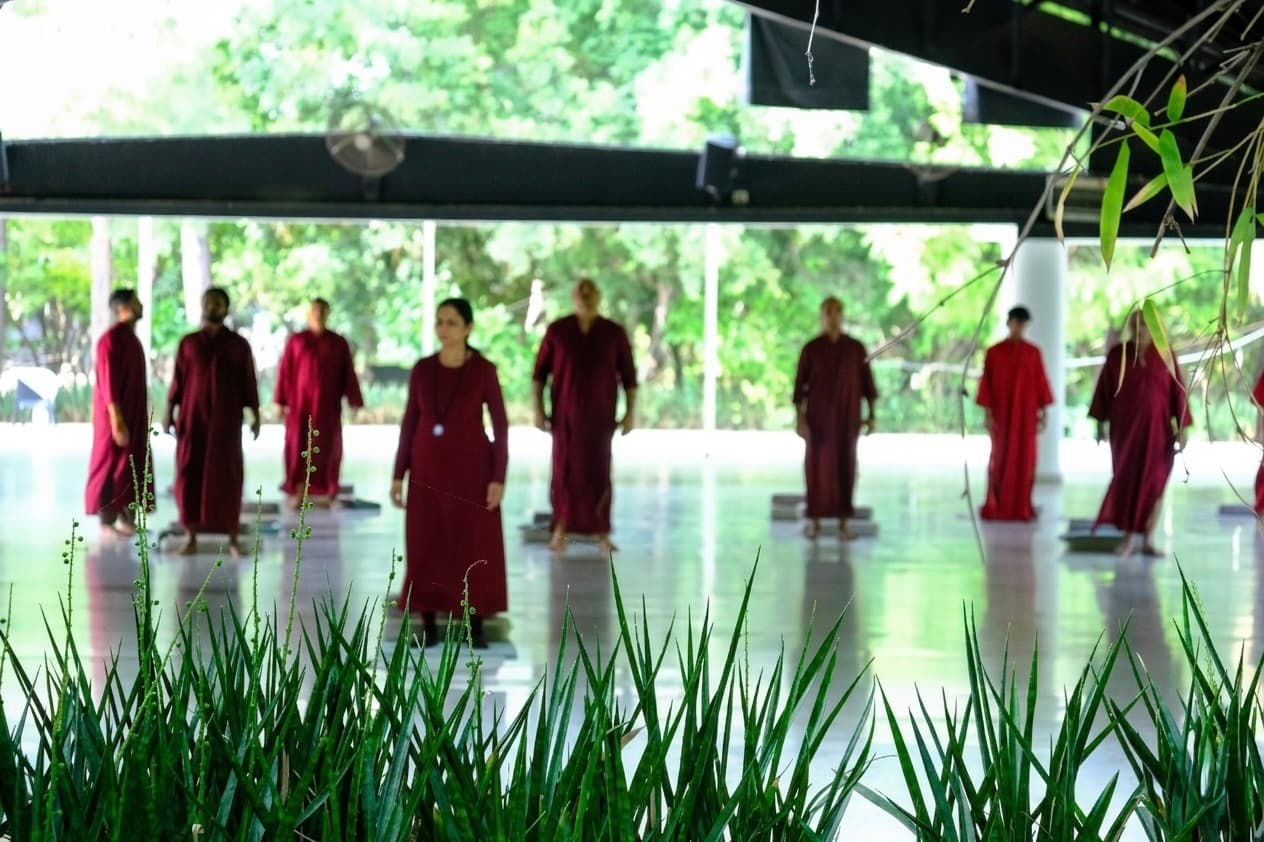
"...Allow the shaking, don't do it. Stand silently, feel it coming, and when your body starts a little trembling help it - but don't do it. Enjoy it, feel blissful about it, allow it, receive it, welcome it - but don't will it. If you force it, it will become an exercise, a bodily physical exercise. Then the shaking will be there but just on the surface, it will not penetrate you. You will remain solid, stone like, rock like within; you will remain a manipulator, the doer, and the body will just be following. The body is not the question - you are the question." - Osho
Osho Kundalini Meditation lasts for one hour and has four stages, three with music, and the last without. The music has been composed under Osho's direct guidance specially for this particular meditation. If you would like to try, it is described below. Remember that the last stage is in silence! ... and a gong will signal the end of the silent period -- promise!
First stage: 15 minutes.
Be loose and let your whole body shake, feeling energies moving up from your feet.
Let go everywhere and become the shaking.
Your eyes may be open or closed.
Second stage: 15 minutes.
Dance . . . any way you feel,
and let the whole body move as it wishes.
Third stage: 15 minutes.
Close your eyes and be still, sitting or
standing . . . witnessing whatever is happening inside and out.
Fourth stage: 15 minutes.
Keep your eyes closed, lie down and be still.
Complete Kundalini Meditation
Begin with shaking, then dancing, and end with stillness and silence, first standing or sitting, then lying. This meditation is usually done in the afternoon to let go of the accumulated stress of the day.
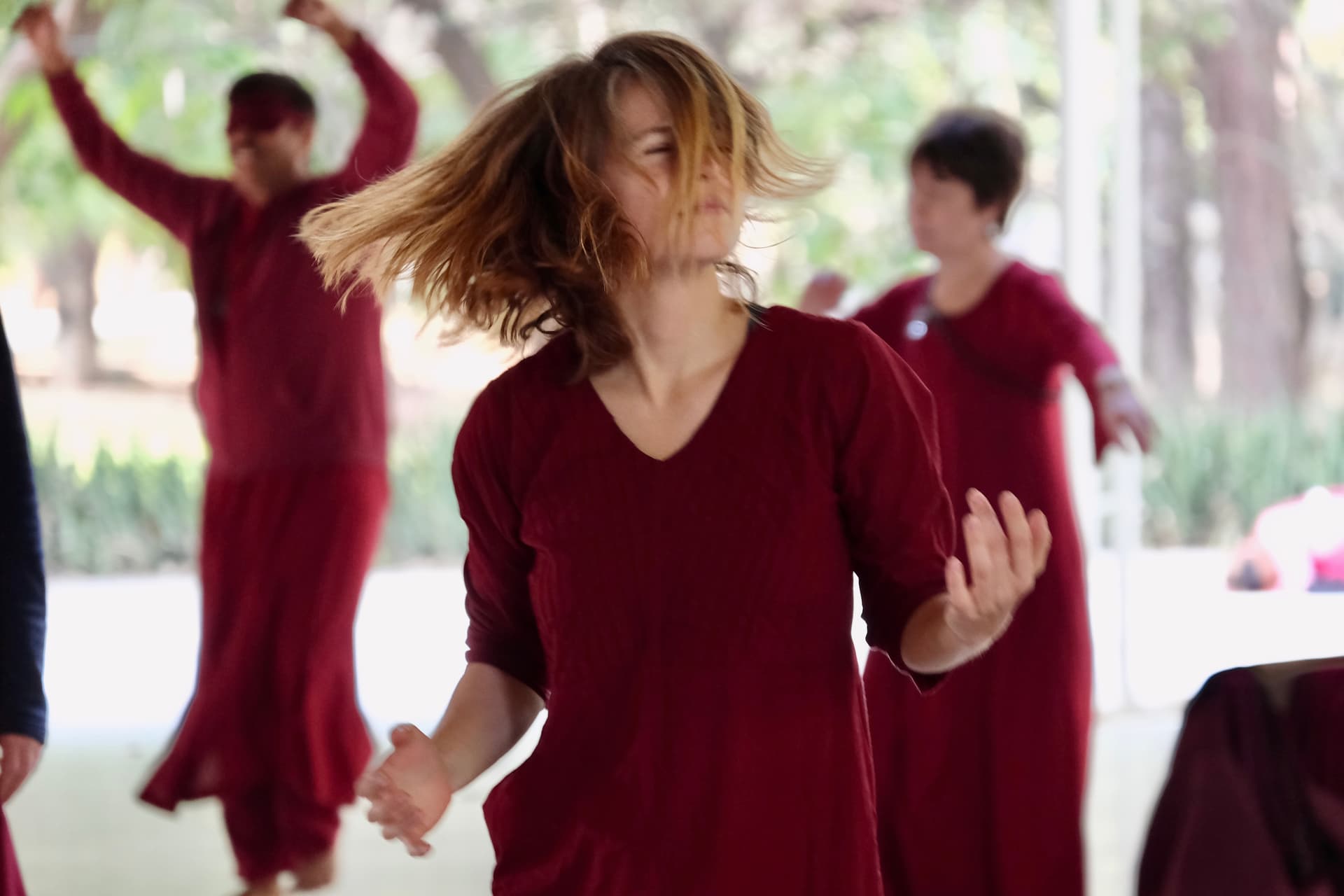
"Let the dance flow in its own way; don't force it. Rather, follow it; allow it to happen. It is not a doing but a happening. Remain in the mood of festivity. You are not doing something very serious; you are just playing, playing with your life energy, playing with your bio-energy, allowing it to move in its own way. Just like the wind blows and the river flows, you are flowing and blowing. Feel it.
And be playful. Remember that word "playful" always with me, it is very basic. In India, we call creation God's Leela God's play. God has not created the world; it is his play."
Natraj is dance as a total meditation. There are three stages, lasting a total of 65 minutes.
First Stage: 40 minutes
With eyes closed dance as if possessed. Let your unconscious take over completely. Do not control your movements or be a witness to what is happening. Just be totally in the dance.
Meditation is needed only because you have not chosen to be happy. If you have chosen to be happy there is no need for any meditation. Meditation is medicinal. If you are ill, then the medicine is needed. Buddhas don't need meditation. Once you have started choosing happiness, once you have
Second Stage: 20 minutes
Keeping your eyes closed, lie down immediately. Be silent and still.
Third Stage: 5 minutes
Dance in celebration and enjoy.
Forget the dancer, the center of the ego. Become the dance. That is the meditation Dance so deeply that you forget completely that 'you' are dancing and begin to feel that you are the dance. The division must disappear. Then it becomes a meditation. If the division is there, then it is an exercise: good, healthy, but it cannot be said to be spiritual. It is just a simple dance. Dance is good in itself. As far as it goes, it is good. After it, you will feel fresh, young. But it is not meditation yet. The dancer must go, until only the dance remains.
So what to do? Be totally in the dance, because division can exist only if you are not total in it. If you are standing aside and looking at your own dance, the division will remain you are the dancer and you are dancing. Then dancing is just an act, something you are doing. It is not your being. So get involved totally; be merged in it Don't stand aside, don't be an observer, Participate!
Let the dance flow in its own way. Don't force it. Rather, follow it: allow it to happen. It is not a doing but a happening. Remain in the mood of festivity. You are not doing something very serious. You're just playing, playing with your life energy, playing with your bioenergy, allowing it to move in its own way. Just like the wind blows and the river flows you are flowing and flowing. Feel it.
And be playful. Remember this word 'playful' always. With me, it is very basic. In this country we call creation God's leela, God's play. God has not created the world. It is his play.
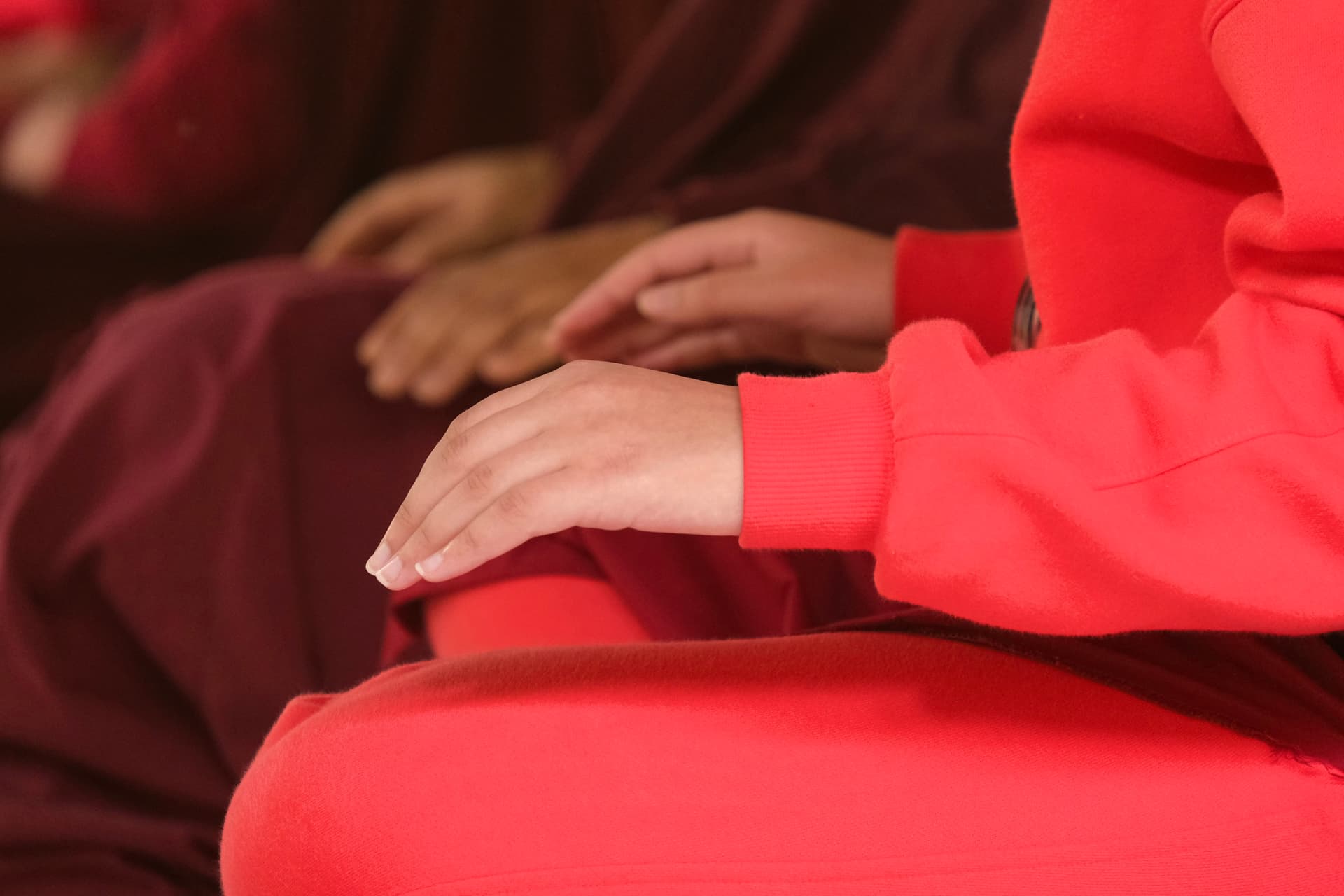
This is an old Tibetan technique of humming, which creates a healing vibration throughout the body, and a hand movement which centers the energy at the navel.
Nadabrahma meditation lasts for one hour and has three stages. It can be done at any time of day, alone or with others, but have an empty stomach and remain inactive for at least 15 minutes afterwards.
First stage: 30 minutes
Sit in a relaxed position with eyes closed and lips together humming loudly enough to be heard by others and create a vibration throughout your body. You can visualize a hollow tube or an empty vessel, filled only with the vibrations of the humming. A point will come when the humming continues by itself and you become the listener. There is no special breathing and you can alter the pitch or move your body smoothly and slowly if you feel like it.
Second stage: 15 minutes
The second stage is divided into two 7 1/2 minute sections. For the first half, move the hands, palms up, in an outward circular motion. Starting at the navel, both hands move forwards and then divide to make two large circles mirroring each other left and right. The movements should be so slow that at times there will appear to be no movement at all. Feel that you are giving energy outwards to the universe.
After 71/2 minutes turn the hands, palms down, and start moving them in the opposite direction. Now the hands will come together towards the navel and divide outwards to the sides of the body. Feel that you are taking energy in. As in the first stage, don't inhibit any soft, slow movements of the rest of your body.
Third stage: 15 minutes
Sit or lie absolutely quiet and still.
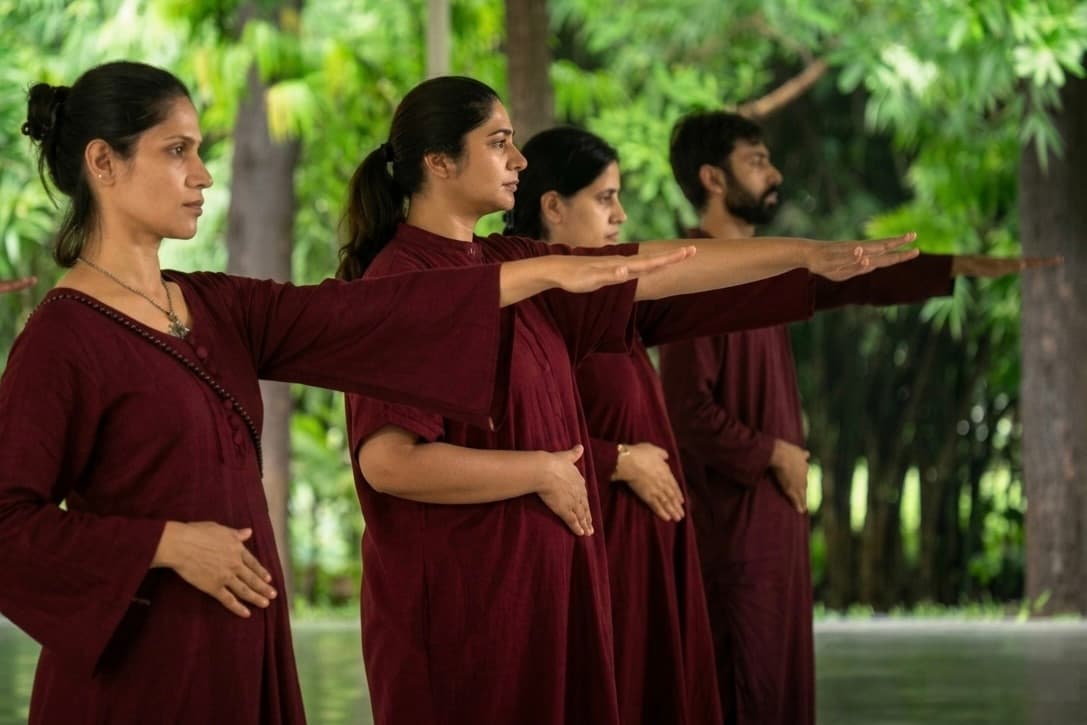
First stage: 30 minutes music.
A continuous dance in a set of six movements. With your eyes open, begin by standing in one place and placing the left hand on the heart and the right hand on the hara. Stand still for a few moments just listening to the music to get centered. When the bell rings, start the sequence as described below. The movements always come from the center, or hara, using the music to keep the correct rhythm. The hips and eyes face the direction of the hand movement. Use graceful movements in a continuous flow. Loud "Shoo" sounds are made from the throat in synchronicity with the sounds from the recording. Repeat this six-movement sequence continuously for 30 minutes.
1) Touch the backs of the hands together pointing downward on the hara. Breathing in through the nose, bring the hands up to the heart and fill them with love. Breathing out make the sound "Shoo" from the throat and send love out to the world. At the same time move the right arm (with fingers extended, palm downward) and right foot straight forward, and move the left hand back down to the hara. Return to the original position with both hands on the hara.
2) Repeat this movement with the left arm and foot. Return to the original position with both hands on the hara.
3) Repeat this movement with the right arm and foot, turning sideways to the right. Return to the original position with both hands on the hara.
4) Repeat this movement with the left arm and foot, turning sideways to the left. Return to the original position with both hands on the hara.
5) Repeat this movement with the right arm and foot, turning directly behind from the right side. Return to the original position with both hands on the hara.
6) Repeat this movement with the left arm and foot, turning directly behind from the left side. Return to the original position with both hands on the hara.
Second stage: 15 minutes music.
Begin by placing the right toe over the left toe. Fold your arms across your chest and embrace yourself. Feel love for yourself. When the music starts bow down to existence for bringing you here for this meditation. When the tempo changes, begin whirling. Turn anticlockwise keeping the eyes open a little, arms stretched out with the right palm turned upward and the left palm facing the ground. Breathe normally and let the whirling take you over. If you feel discomfort from whirling anticlockwise, you can change to clockwise and reverse position of the hands. If a sensation of nausea arises, focusing the eyes on the right hand can be helpful. To end the whirling, slow down and fold the arms over the chest and heart.
Third stage: Silence, 15 minutes.
Lie down on the belly with your eyes closed. Leave your legs open and not crossed to allow all the energy you have gathered to flow through you. Just go inside and allow witnessing to happen.
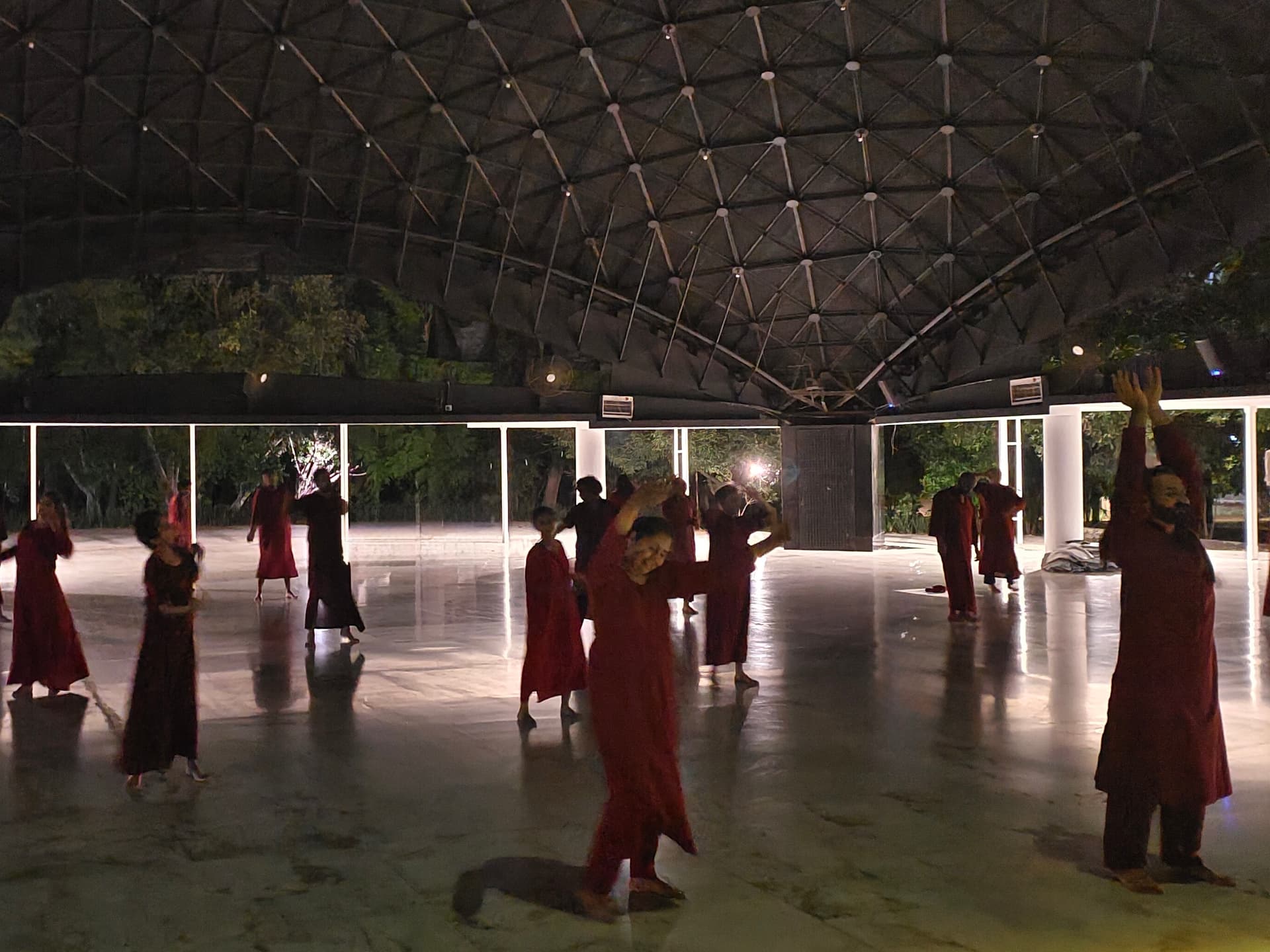
Osho has said that if breathing is done correctly in the first stage, the carbon dioxide formed in the bloodstream will make the meditator as high as if an Gourisahnkar (Mt. Everest).
First stage: 15 minutes music. Sit with eyes closed. Inhale deeply through the nose, filling the lungs. Hold the breath for as long as possible then exhale gently through the mouth, keeping the lungs empty for as long as possible. Repeat this cycle.
Second stage: 15 minutes music. Return to normal breathing and, allowing the gaze to be soft and gentle, look at a candle flame or flashing light. * Keep the body still.
Third stage: 15 minutes music. With closed eyes, stand up and left the body be loose and receptive. The subtle energies within will be felt to move the body outside your normal control. Allow this (Latihan) to happen. Don't you do the moving. Let the moving happen.
Fourth stage: 15 minutes silence. Lie down, silent and still.
*The rhythmic beat of the music in the second stage is seven times the normal hearbeat. If possible, the flashing light should be a synchronized strobe.
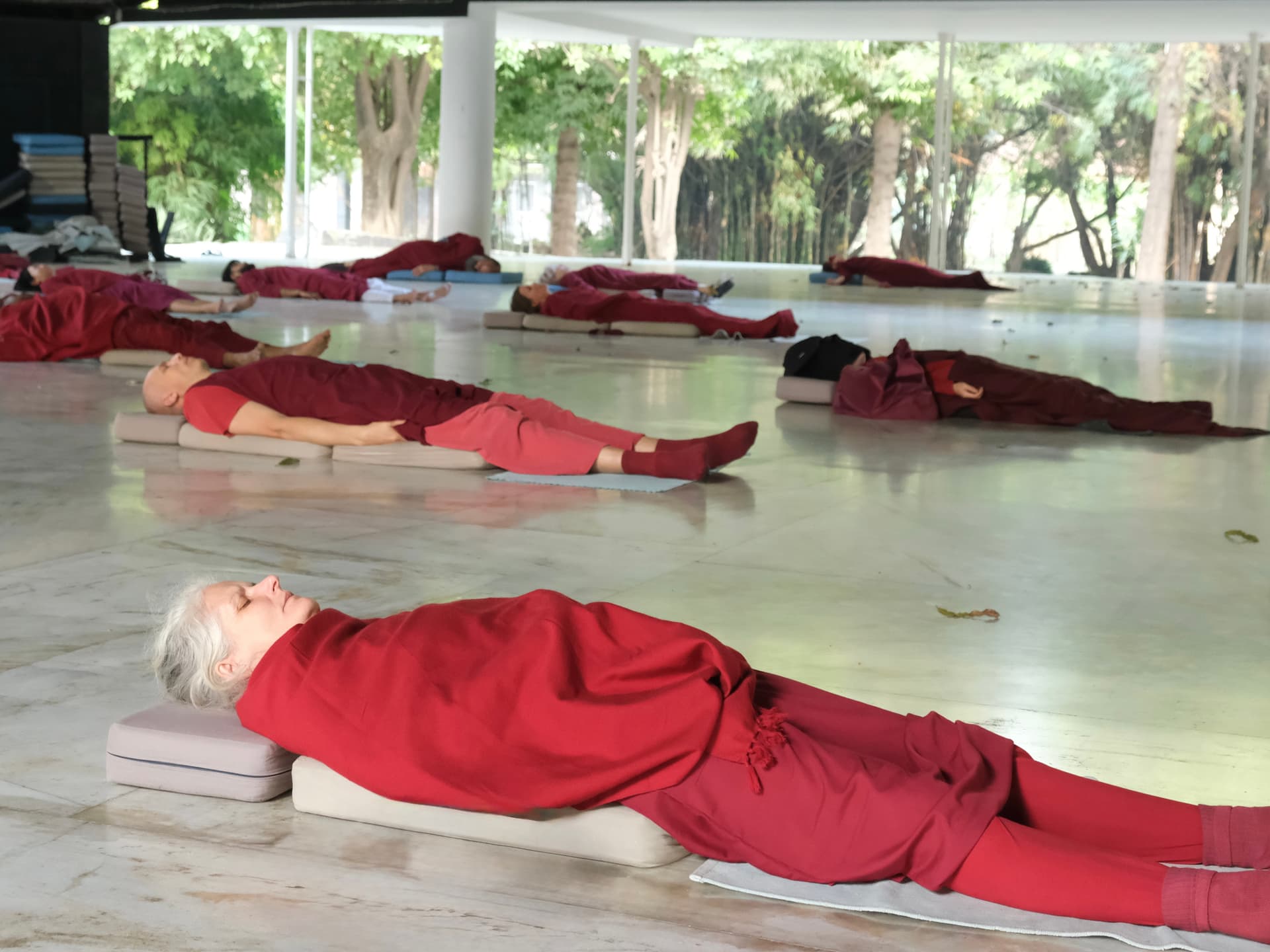
This powerful, cathartic technique creates a circle of energy that results in a natural centering.
First stage: 15 minutes music. With open eyes run on the spot, starting slowly and gradually, getting faster and faster. Bring your knees up as high as possible. Breathe deeply and evenly. Forget the mind and forget the body. Keep going.
Second stage: 15minutes music. Sit with eyes closed and mouth open and close. Gently rotate your body from the waist, like a reed blowing in the wind. Feel the wind blowing you from your side to side, back and forth, around and around. This will bring your awakened energies to the navel center.
Third stage: 15 minutes music. Lie on your back, open your eyes and, with the head still, rotate them in a clockwise direction. Sweep them fully around in the sockets as if you are following the second hand of a vast clock, but as fast as possible. It is important that the mouth remains open and the jaw relaxed, with the breath soft and even. This will bring your centered energies to the third eye.
Fourth stage: 15 minutes silence. Close your eyes and be still.
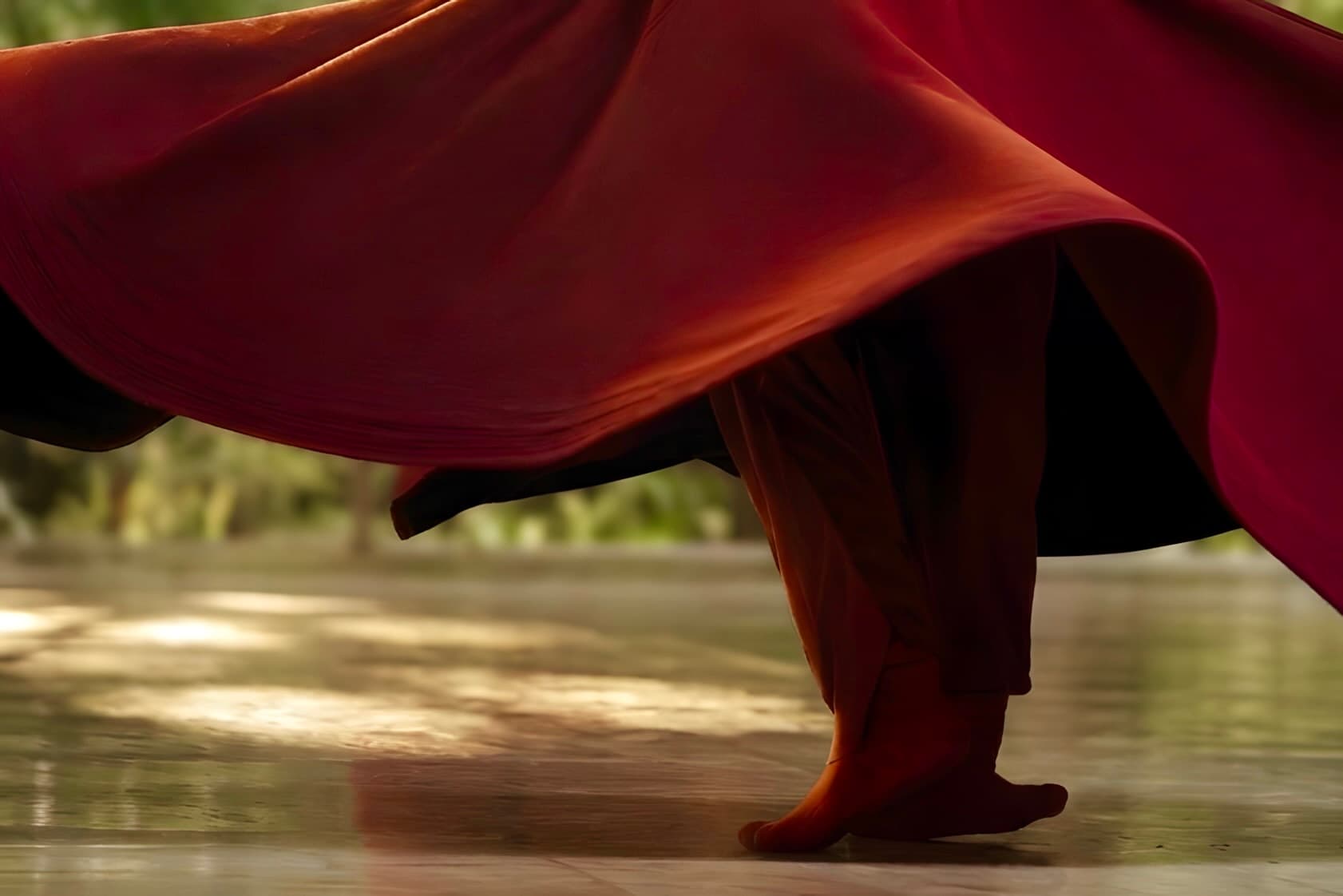
SUFI Whirling is one of the most ancient techniques, one of the most forceful. It is so deep that even a single experience can make you totally different. Whirl with open eyes, just like small children go on twirling, as if your inner being has become a centre and your whole body has become a wheel, moving, a potter’s wheel, moving. You are in the centre, but the whole body is moving.
It is recommended that no food or drink be taken for three hours before whirling. It is best to have bare feet and wear loose clothing. The meditation is divided into two stages, whirling and resting. There is no fixed time for the whirling – it can go on for hours – but it is suggested that you continue for at least an hour to get fully into the
feeling of the energy whirlpool.
The whirling is done on the spot in an anti-clockwise direction, with the right arm held high, palm upwards; and the left arm low, palm downwards. People who feel discomfort from whirling anti-clockwise
can change to clockwise. Let your body be soft and keep your eyes open, but unfocussed so that images become blurred and flowing. Remain silent.
For the first 15 minutes, rotate slowly. Then gradually build up speed over the next 30 minutes until the whirling takes over and you become a whirlpool of energy – the periphery a storm of movement
but the witness at the centre silent and still.
When you are whirling so fast that you cannot remain upright, your body will fall by itself. Don’t make the fall a decision on your part nor attempt to arrange the landing in advance; if your body is soft
you will land softly and the earth will absorb your energy.
Once you have fallen, the second part of the meditation starts. Roll onto your stomach immediately so that your bare navel is in contact with the earth. If anybody feels strong discomfort lying this way, he should lie on his back. Feel your body blending into the earth, like a small child pressed to the mother’s breasts. Keep your eyes closed and remain passive and silent for at least 15 minutes.
After the meditation be as quiet and inactive as possible
Some people may feel nauseous during the Whirling Meditation, but this feeling should disappear within two or three days. Only discontinue the meditation if it persists.
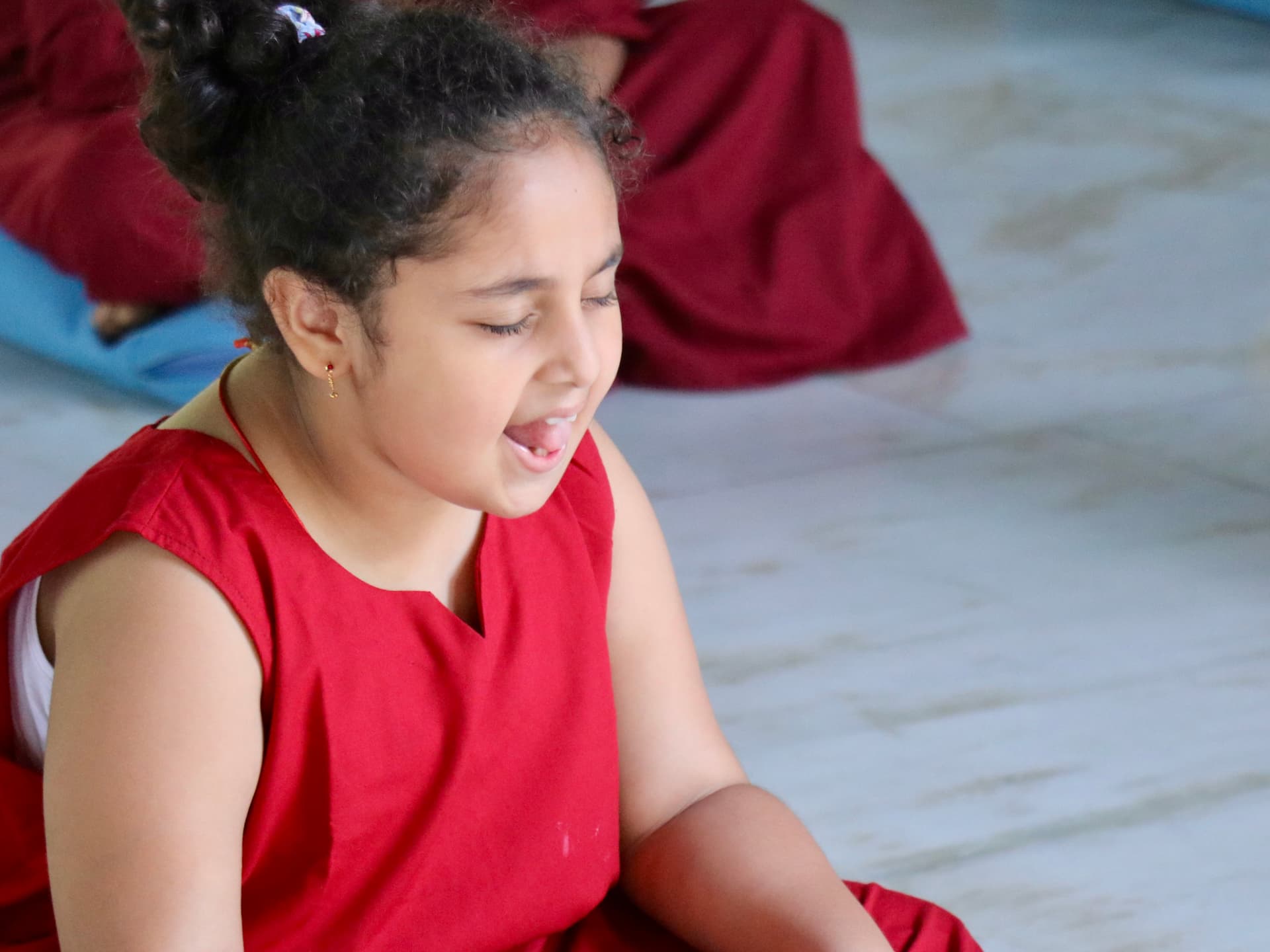
This is a cathartic technique, which encourages expressive body movements. It should be distinguished from the gentle Devavani meditation. The first part is gibberish. The word “gibberish” comes from a Sufi mystic, Jabbar. Jabbar never spoke any language, he just uttered nonsense.
First Stage: 15 minutes.
Either alone or in a group, Standing or sitting, close your eyes and begin to say non sense sounds – gibberish. Make any sounds you like, but do not speak in a language, or use words that you know. Allow yourself to express whatever needs to be expressed within you. Throw everything out, go totally mad. Go consciously crazy. The mind always thinks in terms of words. Gibberish helps to break this pattern of continual verbalization. Without suppressing any of your thoughts, you can throw them out – in gibberish.
Likewise, let your body be expressive E.g. one can cry, scream, throw hands and legs in the air etc. Do not allow there to be any gaps. If you cannot find sounds to gibber with, just say la la la, but don’t remain silent. Do not interfere with others if you are doing it in a group. Just stay with what is happening with you, don’t bother about what others are doing. You can wear a blindfold if it helps.
Second Stage: 15 minutes.
Then for fifteen minutes, lie down on your stomach and feel as if you are merging with the earth. With each exhalation, feel yourself merging with the ground beneath you.